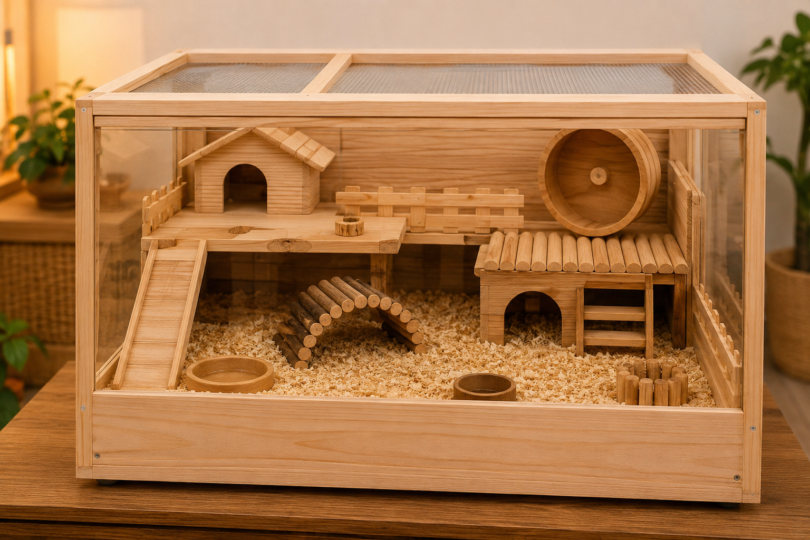

A Syrian hamster requires a large and airy cage to remain healthy and active throughout its life span. Wooden hamster cages are quite popular due to their aesthetic look, good insulation, and ease of customization. Nonetheless, finding a suitable wooden cage can be difficult without understanding specific features that ensure hamsters’ comfort and health. Thus, one needs to consider some vital factors while selecting a cage for their pet.
Key Features of a Suitable Wooden Hamster Cage
The first thing a wooden hamster cage should have is sufficient ventilation through the use of ventilation panels or mesh sides. In addition, it needs to be sturdy and escape-proof since Syrian hamsters are active and intelligent animals. Moreover, the cage should be spacious to accommodate areas for exercise (a wheel), sleeping, food, and waste elimination.
Best Wooden Cages for Syrian Hamsters
The best wooden cages for Syrian hamsters are those made of untreated woods such as birch and pine (sealed). The use of any other material is discouraged as it could be harmful to pets. Additionally, most cages feature a combination of wood and acrylic or metal mesh materials, which help maintain hygiene inside the cage.
How to Choose the Smallest Hamster Cage for Beginner Owners
Selecting the smallest hamster cage for beginners may pose certain difficulties. Indeed, while there are a lot of attractive cages on the market, not all of them are really appropriate and safe to use in terms of providing a long-term home for such pets. The main criteria for selecting such an item is the combination of being small but still comfortable.
Minimum Size Requirements for Small Hamster Cages
The smallest hamster cage, like any other cage, should necessarily provide for the fulfillment of some space requirements. For Syrians, who are highly active and energetic pets, the more spacious the cage is, the better. In the case of such a cage, one should ensure space for a running wheel, a place to eat from, bedding, and a hiding house.
Small Cage Mistakes When buying a small cage beginners
usually make some mistakes in their selection of items. For example, they might buy something attractive and cute, but small in size or having many plastic tubes to move through. Moreover, ventilation is quite an important aspect that should not be overlooked. In addition, some owners overlook the deep bedding requirement. Syrian Hamster Care in Small Wooden Cage Setup Guide
The fact that Syrian hamsters will need more attention
when they are in captivity due to a smaller cage made of wood is quite normal because the lack of space may negatively influence the comfort and overall activity of these animals. However, with the right care regime, hygiene, and approach, it will be possible to ensure your pet’s good health and activity level even in this type of enclosure.
Care Routine of Syrian Hamsters on a Daily Basis
The correct daily routine should include feeding your Syrian hamster, cleaning the cage if needed, and spending a certain period of time together. As Syrian hamsters are nocturnal animals, it means that they will be active at nighttime.
Indoor Home Hamster Cage Ideas for Small Spaces
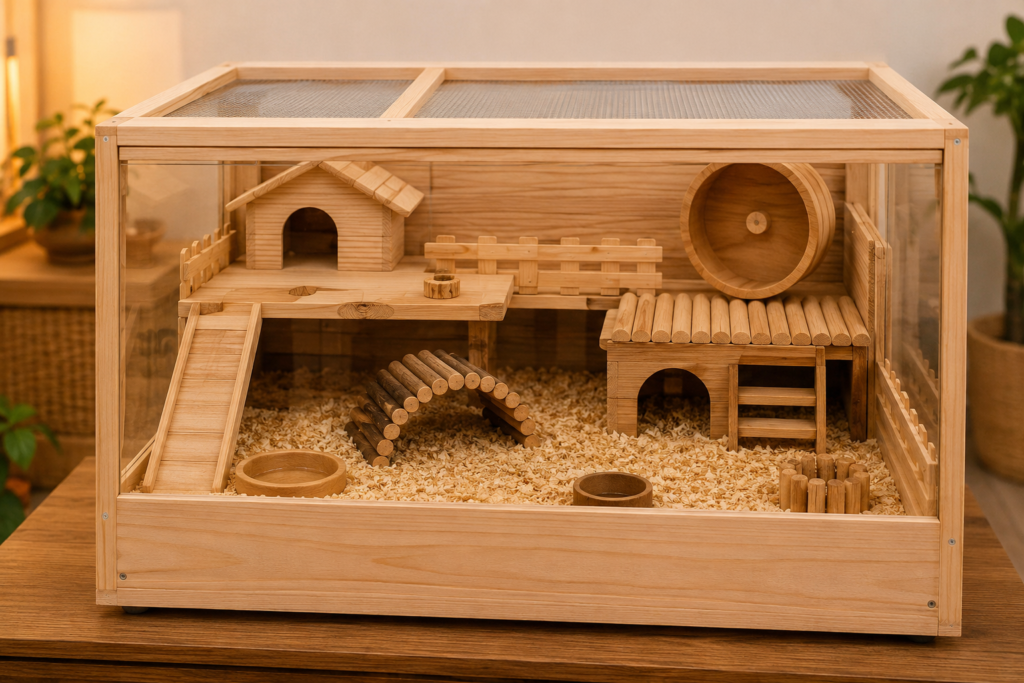
Small rooms should not be an obstacle to having a happy hamster, because if there is a desire to have such a pet, then everything will work out through careful organization of his dwelling. Efficient use of space, proper ventilation, and ease of cleaning should be prioritized.
Hamster Cage Designs for Small Spaces
Cages that do not take up much space in the house but are suitable for a hamster include multi-level wooden cages or cages installed vertically in the corner. In addition, acrylic aquariums where different levels are separated for sleeping, eating, and playing will do great.
Indoor Hamster Habitat Ideas to Consider
To make it interesting to look at the hamster cage, tunnels and other elements should be added. You can also build a small structure yourself using wood where there will be places for sleep, eating, and rest. Transparent walls of the cage will allow you to constantly monitor the pet.
Ideas for Placing Hamsters’ Cages in House
It will be convenient to place a hamster cage in a quiet and undisturbed place in the apartment. The bedroom or a quiet part of the living room would be suitable. It is not recommended to install a cage
Hamster Habitat Setup Guide for Beginners
Creating a proper living arrangement for your hamster is crucial to its physical, mental, and behavioral health. An organized cage will minimize your hamster’s stress levels and promote physical activity and contentment. As a beginner, you should learn about the important items in a hamster habitat, cage organization, and other considerations to set up your hamster’s perfect home.
Important Elements of a Hamster Habitat
For beginners, a hamster habitat should consist of a large cage, comfortable bedding, a food dish, a water bottle, a wheel, and a hiding box. Chew toys and tunnels are other elements that will help stimulate your pet. All cage supplies and accessories need to be safe and non-toxic.
Organizing the Cage
A properly organized cage includes different zones, such as the sleep area, eating area, and play zone. Your hamster should have easy access to the water bottle, and the food dishes should be far from the bedding areas. The running wheel should stand on a sturdy base.
How to Create a Stress-Free Environment
To keep your hamster stress-free, place the cage in a quiet and stable location away from loud noises and direct sunlight. Avoid frequent handling during the day as hamsters are nocturnal. Maintain a consistent cleaning schedule and provide enough hiding spots so your hamster feels safe and secure inside its habitat.
Hamster Bedding Materials and Comfort Tips
Proper bedding selection is crucial for maintaining your pet’s overall well-being, hygiene, and natural instincts. Notably, quality bedding promotes burrowing, provides a comfortable sleeping experience, and helps the animal stay warm at the same time. Besides, it maintains hygiene and prevents foul odor inside the cage. For novice owners, safety, cleanliness, and the absorbent nature of bedding is always crucial.
Best Beddings for Your Hamsters
For hamsters, the best bedding consists of paper-based bedding products, aspen shavings, and hemp bedding. Such materials provide an appropriate texture and high levels of moisture absorption. Moreover, it is suitable for all types of hamsters. Another tip is using deep bedding since hamsters like digging and making tunnels.
Safe Bedding Materials for Hamsters vs Dangerous
Safe bedding materials are dust-free and non-toxic; therefore, you will find paper bedding and aspen wood shavings perfect for hamsters. In turn, unsafe beddings consist of pine and cedar wood shavings (unless kiln-dried), any scented products, and any kind of dusting materials or those with chemicals.
Changing Frequency of Hamster Bedding
For spot cleaning, you should conduct this procedure daily; however, weekly changing of the whole bedding is more than acceptable. Nevertheless, if you have a big cage and
Pet Rodent Care Tips for Beginners
Taking care of pet rodents like hamsters requires consistency, proper feeding, and a clean environment. Beginners should focus on daily routines, balanced diet, and observing health changes to ensure their pets stay active and stress-free.
Daily Care Routine for Rodents
A daily care routine includes checking food and water, cleaning dirty bedding spots, and observing your hamster’s behavior. Rodents are mostly active at night, so avoid disturbing them during the day. Regular handling and interaction help build trust over time.
Feeding and Hydration Basics
Rodents need a balanced diet of pellets, fresh vegetables, and occasional treats. Always provide clean water using a water bottle with a nozzle to prevent contamination. Avoid sugary or unsafe foods, as they can harm your pet’s health.
Health Signs to Watch in Hamsters
Common health issues include loss of appetite, unusual sleeping patterns, wet tail, or fur loss. If your hamster becomes inactive or shows breathing problems, it may need veterinary attention. Early observation is key to preventing serious illness.
Pet Rodent Care Tips for Beginners
Taking care of pet rodents involves keeping clean cages and providing appropriate nutrients. By maintaining a safe environment in the cage and sticking to an organized daily routine, your hamster will remain happy and healthy during its lifetime.
Daily Care Routine for Rodents
Each day you need to check how much food there is, clean up messes, provide access to fresh water, and gently interact with your animal to relieve stress.
Basic Nutrition Requirements
Proper feeding implies a mixture of special rodent pellets, fresh vegetables, and occasional treats. You should keep water always fresh and place it in a stable bottle to avoid spillage.
Indications That Your Hamster Is Unhealthy
Some symptoms you need to watch out for include laziness, decreased food intake, diarrhea, and unusual changes in fur texture.
Syrian Hamster Cage Size Guide
Selecting the correct cage size is a critical consideration when thinking about your Syrian hamster’s well-being. Syrian hamsters are energetic creatures that are also quite territorial; thus, they require plenty of space to move around freely.
Reccomended Cage Size for Syrian Hamsters
It is recommended that you provide a cage with at least 450 square inches of living space for your Syrian hamster, although larger cages are ideal. Such a large cage would allow for the inclusion of a running wheel, toys, and other amenities.
Why Cage Size is Important to Your Syrian Hamster’s Well-being
An inadequate cage may cause stress, obesity, boredom, and other negative impacts on your hamster’s well-being. It would be ideal for them to have a large cage where they can remain active.
Small Cage VS. Large Cage Comparison
A small cage is usually easy to clean; however, the hamster cannot exercise properly and thus tends to chew the bars and run around constantly due to boredom.
Wooden Hamster House Design Ideas
Wooden hamster house designs focus on combining comfort, safety, and creativity. A well-designed cage not only looks good but also improves your hamster’s quality of life.
Creative Wooden Cage Layouts
You can design cages with tunnels, climbing areas, and multi-room sections. These layouts keep hamsters active and reduce boredom inside the enclosure.
Ventilation-Friendly Designs
Proper airflow is very important in wooden cages. Adding mesh sides or ventilation holes ensures fresh air circulation and prevents overheating or humidity issues.
Stylish and Functional Cage Ideas
Modern wooden cages can include pull-out trays for easy cleaning and modular sections for customization. This makes them both attractive and practical for pet owners.
Indoor Hamster Habitat Ideas for a Happy Pet
Hamsters require a comfortable, safe, and stimulating habitat both indoors and outdoors. It is possible to make sure the habitat is healthy and stimulating even in limited space.
Suggestions for Enrichment of Hamsters
Tunnels, chew toys, exercise wheel, and hideout are some enrichment ideas for hamsters. These will ensure that hamsters remain busy.
Safe Toys and Accessories Arrangement
Only use safe toys that are nontoxic made up of wood or safe plastics. Avoid accessories that have sharp corners or loose parts.
Ways to Make Hamsters Active Indoors
Some ways to keep hamsters active indoors include offering a bigger wheel, providing opportunities for playing outside their cages, changing cages’ arrangement periodically, etc.