
How to Take Care of a Pet Turtle for Beginners
Taking care of a pet turtle as a beginner is not very difficult, but it does require proper setup, patience, and daily care. Turtles are long-living pets, so understanding their basic needs is very important before bringing one home.
Basic turtle care requirements for new owners
A pet turtle needs a clean water tank, proper lighting (UVB light), a basking area, and a balanced diet. Clean water is the most important factor because dirty water can cause serious health problems. You should also maintain the right temperature in the tank so the turtle stays active and healthy.
Common mistakes beginners should avoid
Many beginners keep turtles in small containers, which is harmful. Another mistake is not changing water regularly or overfeeding them. Also, without UVB light, turtles can develop shell and bone problems. Avoid touching the turtle too often, as it can cause stress.
Essential things you need before getting a turtle
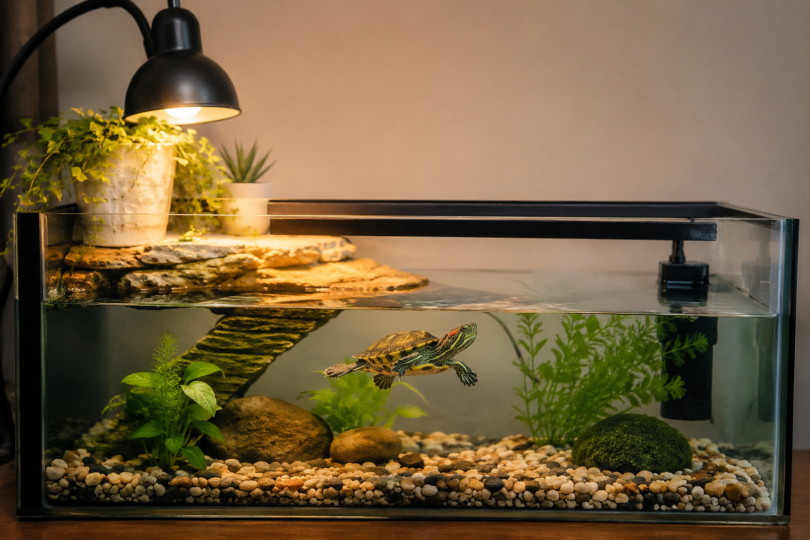
Before getting a turtle, you should prepare a proper aquarium, water filter, basking platform, UVB lamp, turtle food, and a thermometer. Setting up everything in advance ensures your turtle adjusts easily and stays healthy from day one.
How to Take Care of a Pet Turtle at Home
Taking care of a pet turtle at home requires a proper setup and daily attention. A clean environment, correct temperature, and good hygiene are the key factors to keep your turtle healthy and active.
Setting up a safe home environment
To create a safe home for your turtle, you need a proper aquarium or tank with enough space for swimming and resting. Add a basking area where the turtle can dry and warm up. Make sure the tank is placed in a quiet area away from direct sunlight, fans, or loud noise to reduce stress.
Indoor temperature and lighting needs
Turtles need both heat and UVB light to stay healthy. Maintain a warm basking area and cooler water zone inside the tank. UVB lighting helps in strong shell development and prevents diseases. Without proper lighting, turtles can become weak and inactive.
Water and hygiene maintenance at home
Clean water is very important for turtle health. Change or filter the water regularly to avoid bacteria buildup. Remove leftover food daily and clean the tank weekly. Good hygiene prevents infections and keeps your turtle active and healthy.
How to Take Care of a Pet Turtle in a Tank
Keeping a pet turtle in a tank requires proper planning because the tank becomes its full home. A well-set aquarium ensures your turtle stays healthy, active, and stress-free.
Choosing the right aquarium size
The size of the aquarium is very important for a turtle’s comfort. A small tank can limit movement and cause stress. Always choose a spacious tank where your turtle can swim freely and grow properly. Bigger tanks are always better because turtles grow with time.
Water level and filtration system setup
Maintain the correct water level depending on your turtle’s species. The water should be deep enough for swimming but also allow easy access to the basking area. A strong filtration system is essential because turtles make water dirty quickly. Good filtration keeps water clean and reduces health risks.
Basking area and UVB lighting setup
A basking area is a dry platform where turtles rest and absorb heat. Place a heat lamp above it to maintain proper temperature. UVB lighting is also necessary for shell health and bone development. Without proper basking and lighting, turtles can become weak and unhealthy.
Turtle Habitat Setup Guide
A proper turtle habitat setup is very important for your pet’s health, comfort, and long life. A natural and safe environment helps turtles feel less stressed and stay active.
Creating a natural and safe turtle habitat
Start by choosing a large tank or aquarium that allows enough space for swimming and movement. Add both water and a dry basking area so your turtle can rest properly. Make sure the habitat is safe, with no sharp objects that can hurt the turtle. Clean water and proper filtration are also essential for a healthy environment.
Tank decoration and hiding spots
Adding decorations like smooth rocks, small plants, and logs can make the tank feel more natural. Hiding spots are very important because turtles like to feel secure. These spaces help reduce stress and make your turtle feel safe in its environment.
Ideal temperature and humidity conditions
Maintaining the right temperature is key for turtle health. The basking area should be warm, while the water should stay slightly cooler. Proper balance between heat and humidity helps in digestion, activity, and shell growth. Always monitor conditions using a thermometer for best results.
Aquatic Turtle Care Guide
Aquatic turtles live most of their life in water, so proper care of their environment is very important. Clean water, good diet, and regular monitoring help keep them healthy and active.
Water quality and cleaning routine
Water quality is the most important part of aquatic turtle care. Dirty water can quickly cause infections and shell problems. You should use a good filtration system and change part of the water regularly. Also remove leftover food daily and clean the tank weekly to keep the environment fresh and safe.
Best aquatic turtle species for beginners
Some aquatic turtles are easier to care for than others. Beginner-friendly species are usually more adaptable and less sensitive to small mistakes. Choosing the right species makes care easier and improves the chances of a healthy pet.
Health signs and disease prevention
A healthy turtle is active, eats well, and has a clean, strong shell. If your turtle becomes inactive, stops eating, or shows shell discoloration, it may be sick. To prevent diseases, always keep water clean, provide proper lighting, and maintain a balanced diet. Regular observation helps catch problems early.
Turtle Tank Setup and Maintenance
Setting up and maintaining a turtle tank properly is very important for your pet’s long-term health. A clean and well-organized tank helps prevent diseases and keeps your turtle active and happy.
Step-by-step tank setup process
First, choose a large aquarium that gives enough space for swimming and movement. Add a water section and a dry basking area inside the tank. Install a UVB light and heat lamp above the basking spot. Then add a strong water filter to keep the water clean. Finally, decorate the tank with safe rocks or plants to make it feel natural.
Regular tank cleaning schedule
A turtle tank should be cleaned regularly because turtles make water dirty quickly. Remove leftover food every day and check the water condition. Do partial water changes weekly and deep clean the tank every few weeks. Regular cleaning prevents bad smell, bacteria growth, and diseases.
Filtration and water change tips
Use a high-quality filter that can handle more waste than normal fish tanks. Turtles need stronger filtration because they produce more waste. Change 20–30% of the water regularly instead of replacing all water at once. Always use dechlorinated water to keep your turtle safe and healthy.
Pet Turtle Feeding Schedule
A proper feeding schedule is very important for keeping your pet turtle healthy, active, and strong. A balanced diet helps in shell growth, energy, and long life.
What to feed your pet turtle
Pet turtles eat a mix of animal and plant-based food depending on their age and species. You can feed them commercial turtle pellets, small insects, worms, leafy vegetables, and sometimes fruits. Always provide fresh and safe food, and avoid processed or oily human food.
How often to feed baby and adult turtles
Baby turtles need to be fed more often because they are growing fast, usually once a day. Adult turtles eat less frequently, about every 2–3 days. Overfeeding can cause health problems, so it is important to follow a proper feeding routine based on age and size.
Healthy diet tips for long life
A healthy turtle diet should always be balanced with protein, vegetables, and vitamins. Avoid giving too much meat or only one type of food. Clean water should always be available for drinking and swimming. A good diet helps your turtle live longer and stay disease-free.
How to Take Care of a Baby Pet Turtle
Baby turtles are very small and delicate, so they need extra care, proper environment, and careful handling. With the right setup and routine, they can grow healthy and strong.
Special care needs of baby turtles
Baby turtles need a warm, clean, and safe environment to survive. Their tank should have shallow water so they can easily swim and breathe. A basking area with proper UVB lighting is very important for shell development. Clean water is essential because baby turtles are more sensitive to bacteria and infections.
Feeding and growth requirements
Baby turtles eat more frequently than adults because they are growing quickly. You should feed them small portions of protein-rich food like turtle pellets, worms, or small insects daily. A balanced diet helps in strong shell growth and healthy development. Avoid overfeeding, as it can affect their digestion and water quality.
Safety and handling tips for small turtles
Handle baby turtles very gently and only when necessary. Always wash your hands before and after touching them. Avoid dropping or squeezing them, as their shells are still soft. Keep them away from larger pets or unsafe areas to prevent injuries and stress.
Pet Turtle Care and Turtle Care Guide
Taking proper care of a pet turtle requires consistency, patience, and the right daily routine. A well-maintained environment and balanced diet help your turtle stay active, healthy, and stress-free for many years.
Daily care routine checklist
Every day, check your turtle’s water quality and remove any leftover food. Make sure the basking area is clean and the UVB light is working properly. Feed your turtle according to its age and observe its behavior for any signs of stress or illness. Small daily checks help prevent big health problems.
Long-term turtle health maintenance
For long-term care, regularly clean the tank and maintain proper water filtration. Provide a balanced diet with both protein and vegetables to support growth and shell health. Ensure the temperature and lighting stay consistent throughout the year. Regular observation helps you detect health issues early and keep your turtle safe.
Final tips for happy and healthy turtles
A happy turtle needs a clean habitat, proper nutrition, and a stable environment. Avoid overhandling and always keep stress levels low. Give your turtle enough space to swim and bask comfortably. With proper care and attention, your turtle can live a long, healthy, and active life.