
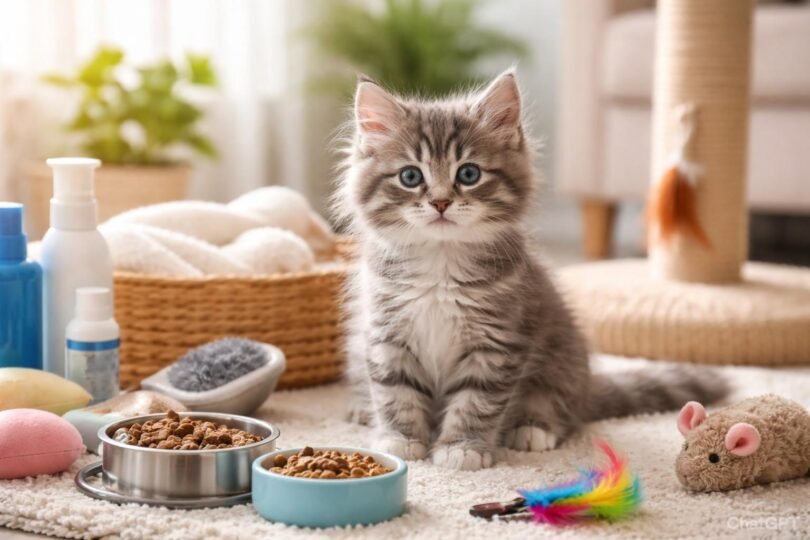

Bringing a kitten home is an exciting and joyful experience, but it also comes with responsibility. Kittens are delicate, curious, and full of energy, which means they need proper care to grow into healthy and happy adult cats. If you are a new pet owner, learning how to care for a kitten correctly is essential. This guide covers everything you need to know about feeding, health, and training your kitten.
Understanding Your Kitten’s Needs
Kittens grow very fast during their first year of life. Their bodies and minds are developing, so they require special attention, proper nutrition, and a safe environment. A kitten depends on you for warmth, food, medical care, and emotional bonding. The better the care you provide early on, the healthier your cat will be in the future.
Feeding Your Kitten the Right Way

Proper nutrition is one of the most important parts of kitten care.
What to Feed a Kitten
Kittens need food that is specially formulated for growth. Kitten food contains higher protein, fat, vitamins, and minerals compared to adult cat food. You can choose between:
- High-quality dry kitten food
- Wet kitten food
- A mix of both dry and wet food
Always check the label to make sure the food is designed for kittens.
How Often to Feed
- 0–8 weeks: Kittens usually rely on their mother’s milk or kitten milk replacer
- 8–12 weeks: Feed 4 small meals a day
- 3–6 months: Feed 3 meals a day
- 6–12 months: Feed 2 meals a day
Fresh water should always be available. Avoid giving cow’s milk, as it can upset a kitten’s stomach.
Keeping Your Kitten Healthy
Vet Visits and Vaccinations
Take your kitten to a veterinarian as soon as possible. A vet will:
- Check overall health
- Create a vaccination schedule
- Provide deworming and flea prevention
- Give advice on spaying or neutering
Regular vet visits help detect health issues early.
Grooming and Hygiene
Even though cats groom themselves, kittens still need help.
- Brush your kitten once or twice a week
- Trim nails carefully every few weeks
- Clean ears gently if dirty
- Introduce bathing only when necessary
Keeping the litter box clean is also important. Scoop daily and change litter regularly to prevent infections and bad habits.
Training Your Kitten at Home
Training a kitten is easier than many people think.
Litter Box Training
Most kittens naturally learn to use a litter box.
- Place the litter box in a quiet area
- Put the kitten in the box after meals and naps
- Keep the box clean
Avoid moving the litter box too often.
Teaching Good Behavior
Kittens love to scratch, bite, and jump. This behavior is normal, but it should be guided properly.
- Provide scratching posts to protect furniture
- Use toys instead of hands during playtime
- Say “no” calmly and redirect bad behavior
Never shout or hit your kitten, as it can cause fear and aggression.
Creating a Safe Environment
Your home should be kitten-proofed before bringing your pet inside.
- Remove small objects that can be swallowed
- Hide electrical cords
- Keep toxic plants and chemicals out of reach
- Close windows and balconies securely
A safe environment prevents accidents and injuries.
Socialization and Playtime
Playtime is not just for fun it helps kittens learn coordination and social skills.
- Play with your kitten daily
- Use interactive toys like balls and feather wands
- Allow rest time after play
Spending quality time with your kitten strengthens your bond and builds trust.
Monitoring Growth and Development
Keep an eye on your kitten’s growth.
- Healthy kittens are active and playful
- Appetite should be strong
- Fur should be clean and shiny
If you notice signs like vomiting, diarrhea, lethargy, or loss of appetite, contact a vet immediately.
Final Thoughts
Learning how to care for a kitten takes patience, love, and consistency. By providing proper feeding, regular health care, and gentle training, you are setting the foundation for a long and happy life together. A well-cared-for kitten grows into a confident, affectionate, and healthy cat that becomes a beloved member of your family.







[…] Kittens have very small energy reserves.They can become weak within 12–24 hours without food. […]