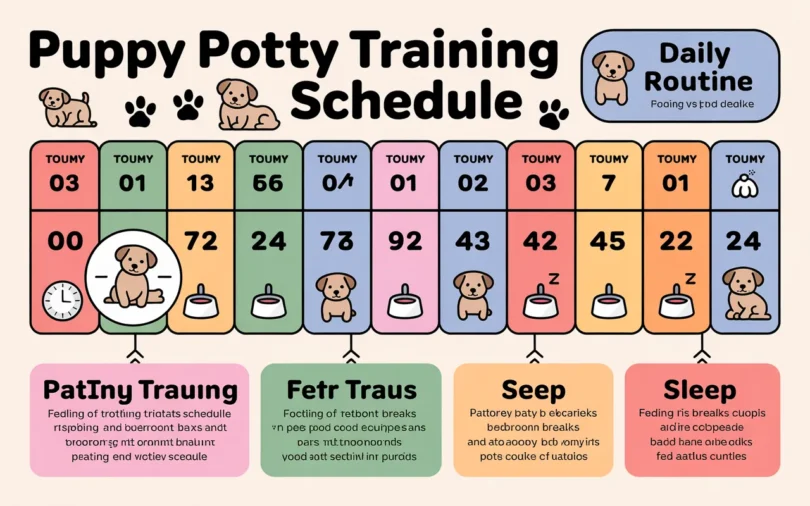

A proper puppy potty training schedule is one of the most important parts of raising a happy and well-behaved dog. Puppies learn quickly when they follow a consistent routine, making it easier to prevent indoor accidents and build healthy bathroom habits. Many new pet owners struggle with house training a puppy.
because they do not understand their puppy’s bladder control or daily potty needs. By using a structured puppy potty routine, regular bathroom breaks, and positive reinforcement, you can speed up the entire training process. This guide will help you understand the best potty training methods, how often puppies should go outside, and tips for creating an effective crate training schedule for long-term success.
Why a Puppy Potty Training Schedule Is Important
A puppy’s bladder is still developing, which means they cannot hold urine for long periods. Without a schedule, puppies become confused and are more likely to have accidents inside the house.
A structured potty training schedule helps:
- Build a consistent bathroom routine
- Reduce indoor accidents
- Improve bladder control
- Teach puppies where to potty
- Speed up the house training process
- Create better behavior habits
Consistency is one of the most important parts of puppy training.
When to Start Potty Training Your Puppy
The best time to start potty training is as soon as your puppy comes home. Most puppies begin learning potty habits between 8 and 12 weeks of age.
Younger puppies need more frequent bathroom breaks because they have smaller bladders and less control.
Puppy Potty Training by Age
8–10 Weeks Old
- Potty break every 60 minutes
- Frequent supervision required
- More indoor accidents are normal
10–12 Weeks Old
- Potty break every 90 minutes
- Better bladder control develops
- Crate training becomes easier
3–6 Months Old
- Potty break every 3–4 hours
- Fewer accidents indoors
- Puppy starts signaling to go outside
6 Months and Older
- Better control and routine
- Longer overnight sleep possible
- More freedom inside the house
Essential Supplies for Puppy Potty Training
Before starting your puppy potty training schedule, make sure you have the right supplies.
Puppy Potty Training Essentials
- Dog crate
- Puppy leash
- High-value training treats
- Puppy pads (optional)
- Enzyme cleaner for accidents
- Potty bells
- Food and water bowls
- Puppy playpen
These tools help create a successful training environment.
Complete Puppy Potty Training Schedule
Following a consistent routine every day is the fastest way to potty train your puppy.
Morning Puppy Potty Schedule
Immediately After Waking Up
Take your puppy outside within 5 minutes of waking up.
Puppies usually need to pee immediately after sleeping.
After Breakfast
Take your puppy outside 10–15 minutes after eating.
After Playtime
Excitement often triggers potty needs, so schedule another bathroom break.
Afternoon Puppy Potty Schedule
Midday Potty Break
Take your puppy outside every 1–2 hours depending on age.
After Naps
Always take puppies outside after naps.
After Drinking Water
Many puppies need a potty break shortly after drinking.
Evening Puppy Potty Schedule
After Dinner
Take your puppy outside 10–20 minutes after dinner.
Before Bedtime
A final potty break before sleep is essential.
Try to keep bedtime calm and consistent.
Sample Puppy Potty Training Schedule by Age
8-Week-Old Puppy Schedule
| Time | Activity |
| 7:00 AM | Wake up & potty |
| 7:30 AM | Breakfast |
| 7:45 AM | Potty break |
| 9:00 AM | Potty break |
| 11:00 AM | Potty break |
| 1:00 PM | Lunch & potty |
| 3:00 PM | Potty break |
| 5:00 PM | Dinner & potty |
| 7:00 PM | Potty break |
| 10:00 PM | Final potty |
Crate Training and Potty Training Together
Crate training helps puppies learn bladder control because dogs naturally avoid soiling their sleeping area.
Benefits of Crate Training
- Prevents unsupervised accidents
- Creates a safe sleeping space
- Builds a potty routine
- Helps puppies hold urine longer
Make sure the crate is not too large. Puppies should have enough room to stand, turn, and lie down comfortably.
Best Puppy Potty Training Methods
Positive Reinforcement Training
Reward your puppy immediately after they potty outside.
Use:
- Praise
- Treats
- Toys
- Excited voice
This teaches puppies that pottying outside leads to rewards.
The Timer Method
Set a timer for regular potty breaks.
This helps prevent accidents before they happen.
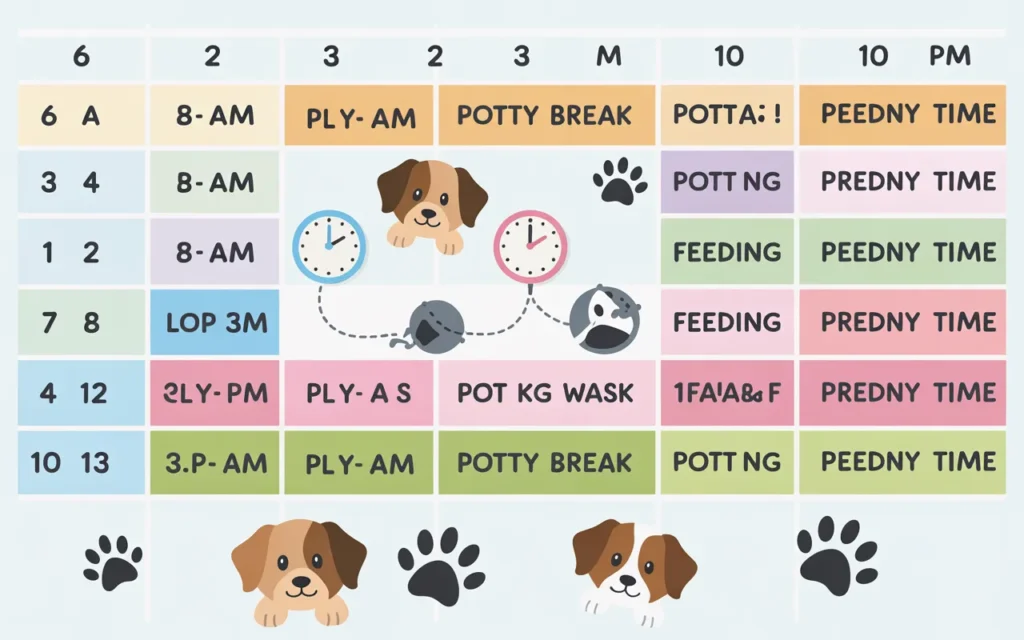
Young puppies usually need:
- Every 60 minutes at 8 weeks
- Every 90 minutes at 10 weeks
- Every 2 hours at 12 weeks
Designated Potty Area
Take your puppy to the same potty spot every time.
The familiar smell encourages faster potty behavior.
Common Puppy Potty Training Mistakes
Many owners accidentally slow down the training process.
Giving Too Much Freedom Too Soon
Unsupervised puppies often sneak away to potty indoors.
Keep puppies supervised or in a crate.
Punishing Accidents
Never yell or punish your puppy for accidents.
Punishment can create fear and confusion.
Instead:
- Clean the mess calmly
- Use enzyme cleaners
- Focus on prevention
Inconsistent Schedule
Skipping potty breaks confuses puppies and increases accidents.
Stick to a regular routine every day.
What to Do If Your Puppy Has an Accident
Accidents are part of the learning process.
If you catch your puppy during the accident:
- Interrupt gently
- Take them outside immediately
- Reward if they finish outdoors
If you find the accident later:
- Clean it thoroughly
- Do not punish the puppy
Consistency works better than anger.
How Long Does Puppy Potty Training Take?
Most puppies learn basic potty training within 4–6 months.
Some puppies learn faster, while others take longer depending on:
- Age
- Breed
- Consistency
- Supervision
- Training method
Patience is very important during the process.
Signs Your Puppy Needs to Potty
Learning your puppy’s signals can prevent accidents.
Common signs include:
- Sniffing the floor
- Walking in circles
- Whining
- Going toward the door
- Sudden restlessness
- Squatting
Take your puppy outside immediately if you notice these behaviors.
Teaching Your Puppy to Ring a Bell
Potty bells are a great communication tool.
How Potty Bells Work
- Hang bells near the door
- Ring the bell before every potty trip
- Reward your puppy for touching the bell
- Take them outside immediately
Over time, your puppy learns to ring the bell when they need to potty.
Night-Time Puppy Potty Training Tips
Young puppies cannot hold urine overnight for long periods.
Tips for Better Night Training
- Remove water 2 hours before bedtime
- Use a crate overnight
- Take one overnight potty break if needed
- Keep nighttime potty trips quiet and boring
Most puppies sleep through the night by 4–6 months old.
Puppy Potty Training Tips for Faster Results
Stay Consistent
Use the same schedule daily.
Reward Immediately
Praise your puppy right after pottying outside.
Supervise Closely
Watch for potty signals.
Keep Training Positive
Avoid punishment and focus on rewards.
Track Potty Times
Keep notes about your puppy’s routine.